Many users choose MB WhatsApp because it is more flexible than standard WhatsApp. A common question is: What file size can mb whatsapp 2026 send? This is especially important if you frequently share videos, photos, or documents, as this version often provides significantly higher transfer limits compared to the original application.
This article will explain file size limits, the types of files you can send, and how to make the most of these features.
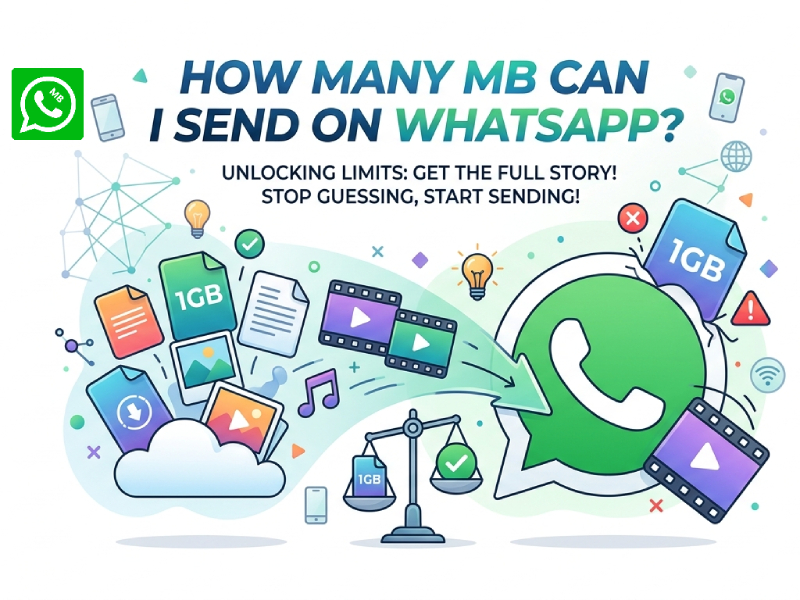
File Size Limit in MB WhatsApp
MB WhatsApp is known for allowing larger file sharing compared to the standard app. In most versions, users can send:
- Videos and files up to around 700 MB
- Documents with large sizes, often in the hundreds of MB
- Images in original or near-original quality
Higher file size limits are significant, especially when you want to share long videos or high-quality media files without editing or compression.
It’s worth noting that the WhatsApp MB version typically gives you more control over how files are sent, which is especially beneficial when navigating the WhatsApp video length limit 2026 to ensure your clips aren’t abruptly cut or overly compressed. For example, you can choose to send the media file as a document, a method that helps maintain the original image quality and bypasses standard gallery restrictions. This is very useful for photos and videos that require attention to detail, allowing you to share high-resolution content exactly as intended.
Comparison with Official WhatsApp
To understand the difference, here is a simple comparison:
| Feature | MB WhatsApp | Official WhatsApp |
| Video Size Limit | Up to ~700 MB | Around 16 MB |
| Document Limit | Higher | Around 100 MB |
| Image Quality | High, less compression | Compressed by default |
This shows why many users prefer MB WhatsApp for sharing media.
Types of Files You Can Send
MB WhatsApp supports a variety of file types, making it suitable for both everyday chatting and simple office tasks. You are not limited to uploading photos or short videos.
Here are the main types of files you can send:
- Videos(MP4, 3GP, etc.)
You can send long videos and even full-length clips. Many users share movies, tutorials, or recorded content without cutting them into parts. - Photos(JPG, PNG, and more)
Images can be sent in higher quality, so details are clearer. This is helpful when sharing travel photos, designs, or screenshots. - Audio files(MP3, WAV)
You can send music, voice recordings, or podcasts. Larger audio files are supported, so longer recordings are not a problem. - Documents(PDF, Word, Excel, PPT)
This is useful for study or work. You can share notes, reports, or slides directly in chats. - Compressed files(ZIP, RAR)
You can send folders packed into one file. This is helpful when sharing many files at once. - App files and other formats
Some versions also allow sending APK or other file types, which gives more flexibility.
What Affects the File Size Limit?
Although WhatsApp MB allows for larger file uploads, the actual file limits encountered, such as the WhatsApp maximum video size send capability, may vary depending on various circumstances. Understanding these factors, including server stability and your current network speed, can help avoid upload failures or long wait times when sharing high-resolution media.
1. App Version
Different versions of WhatsApp MB may support different file size limits. Some older versions may not allow uploading excessively large files, but newer versions usually improve this. Keeping your application updated can help you achieve better performance and higher file size limits.
2. Internet Speed and Stability
A fast and stable network connection is essential when sending large files. If your network speed is slow or unstable, the upload may stop midway or even fail completely. Using Wi-Fi instead of mobile data usually yields better results, especially when transferring large videos or documents.
3. Device Performance
Phone performance can also affect file transfer. If the device has insufficient memory or is running multiple applications simultaneously, it may struggle to process large files, leading to delays, stutters, or failed transmissions.
4. Available Storage Space
Before sending a file, the phone may need temporary space to process the file. If storage is almost full, apps may not be able to handle large files properly. Reserving some available space can avoid this problem.
5. File Format and Quality
Some file formats are larger than others. For example, even if the duration is short, a high-quality video file can still be very large. In addition, files with higher resolution or bitrate will take up more space and take longer to transfer.
6. Receiver’s App and Device
The recipient of the file is also important. If their app version or device cannot handle large files well, they may encounter problems downloading or opening files. In some cases, it may take longer for the file to load on their end.
7. Network Restrictions
Some mobile networks may limit upload speeds or data traffic, especially when using mobile data. This will affect the speed and smoothness of large file transfers.
Tips for Sending Large Files
Sending large files in MB on WhatsApp is easy, but developing a few small habits to optimize your whatsapp mb download speed can make the process significantly faster and more stable for everyone involved.
Use a stable Wi-Fi connection whenever possible. Uploading large files takes time, and moving data can be slow or unstable. A stable Wi-Fi network helps avoid upload failures and saves time.
Send the file as an archive, not a media file. If you send videos or images as regular files, the application may compress them. Sending it as a document can maintain the original quality and avoid reducing the file size.
Check file size before sending. Even though MB WhatsApp supports large files, very large files may still take a long time to send, or may fail to send if the connection is interrupted. If necessary, you can split very large files into smaller parts.
Another useful tip is to close background apps when sending files. This helps the phone focus on uploading, thus improving speed and stability.
You can also rename the file before sending it to make it clearer and easier to understand. This makes it easier for the recipient to find and manage files, especially when you send multiple files.
If you frequently send large files, try to ensure that your device has enough available storage space. Insufficient storage space can cause slow upload speeds or errors during the sending process.
Please wait patiently while uploading large files. Do not switch networks or close applications during file transfer to avoid interrupting the upload.
Benefits of Higher File Limits
The higher file size limit makes everyday use more convenient, especially if you frequently share media or work files.
You can send the complete video without splitting it into multiple segments. This is extremely useful for long videos, tutorials, or recorded events, saving time while ensuring the integrity of the content.
You can maintain higher quality. Even when sending large photos or videos, they remain clear and sharp. This is very helpful for sharing memories, design works, or anything that requires attention to detail.
Another benefit is that file sharing during work or study becomes more convenient. You can send large PDFs, presentations, or ZIP files all at once without using additional applications or splitting the files, thus speeding up the transfer process.
Higher file size limits also mean fewer steps. You don’t need to repeatedly compress files or upload them to other services first; all operations can be completed directly in the chat.
In addition, it improves the group chat experience. You can share large amounts of content with multiple people at once without repeating steps.
It gives you greater freedom in using the app. Whether you’re sharing videos, music, or documents, you face fewer restrictions and can focus on the content itself without worrying about size limitations.